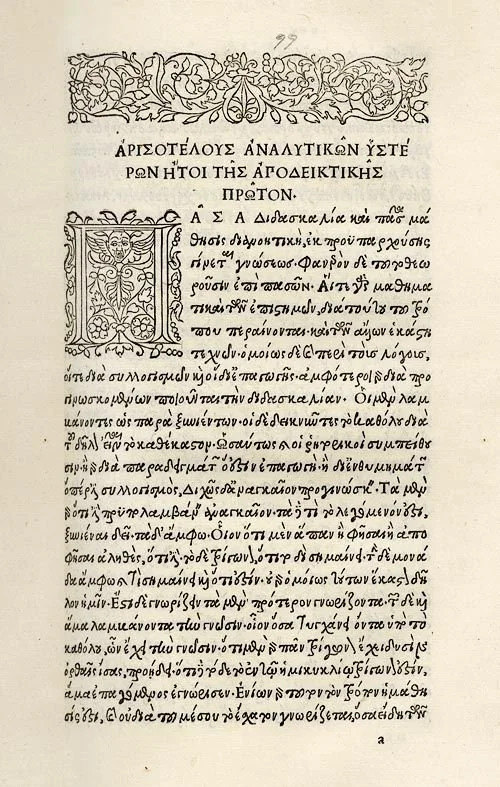
In Aristotle's Metaphysics, he writes: "it is owing to their wonder that men both now begin, and at first began, to philosophise."
I see philosophy as a mode of wondrous engagement— a practice exercised in academic papers, yes, but also in conversation, in storytelling, in aesthetic expression, in ecstatic prayer, in silent reflection, and in action.
I. My job as a teacher is to create the conditions for wonder: to make a familiar idea suddenly strange, to make a strange idea suddenly necessary. The questions at philosophy's center — what is it like to be conscious? what makes a life good? what do we owe each other? what is real? — are not remote from ordinary life. They are ordinary life, regarded through a new lens.
In the classroom, I am less interested in students arriving at conclusions than in students experiencing the genuine difficulty of a problem. A philosophy classroom is the rare sort of place we can sit with the weirdness of existence, and I try to make reveling in the weirdness fun.
II. As I work to make the familiar strange, I also try to make the strange more familiar. I craft activities intended to make abstract problems more concrete, and to help students see the implications of philosophical problems beyond mere logic puzzles. In the past, I’ve used Bad Bunny lyrics to talk about category errors, Chappell Roan to talk about rigid designators, and arts and crafts to learn about love. When discussing Zuboff’s “Sleeping Beauty Paradox” for the philosophy of probability, I created an immersive fairy tale themed game for our section. I vary discussion structure and activities to match the varied learning styles of different groups of students. I endeavor never to let class-time to become stale or stagnant, to sit outside when Cambridge weather mercifully permits, and to bring treats on special occasions.
III. One of the things I most want students to leave with is a changed relationship to disagreement. Our world tends to treat disagreement as a problem to be resolved. I try to teach it as a resource, as the place where the most interesting philosophical work happens. Unlike many other fields (perhaps such as the sciences), philosophy does not measure progress in terms of consensus. At its heart, it is fiercely anti-dogmatic. No philosopher is beyond disagreeing with, and no student is too inexperienced to contribute to the debate.
IV. In my most recent course evaluations, every student surveyed rated my enthusiasm for the material as “Excellent.” In my most recent mid-semester survey, every respondent agreed or strongly agreed that I create an environment where they feel comfortable sharing their views, "even tentative or confused ones." I am particularly proud of these stats because the thing I care about most in a classroom is creating the conditions under which students feel their ideas matter. I find students' ideas, perhaps especially the half-formed ones, endlessly interesting and worthy of attention.
COURSES
Philosophy of Mind, Teaching fellow for Professor Cheryl Chen. Harvard University, Spring 2026.
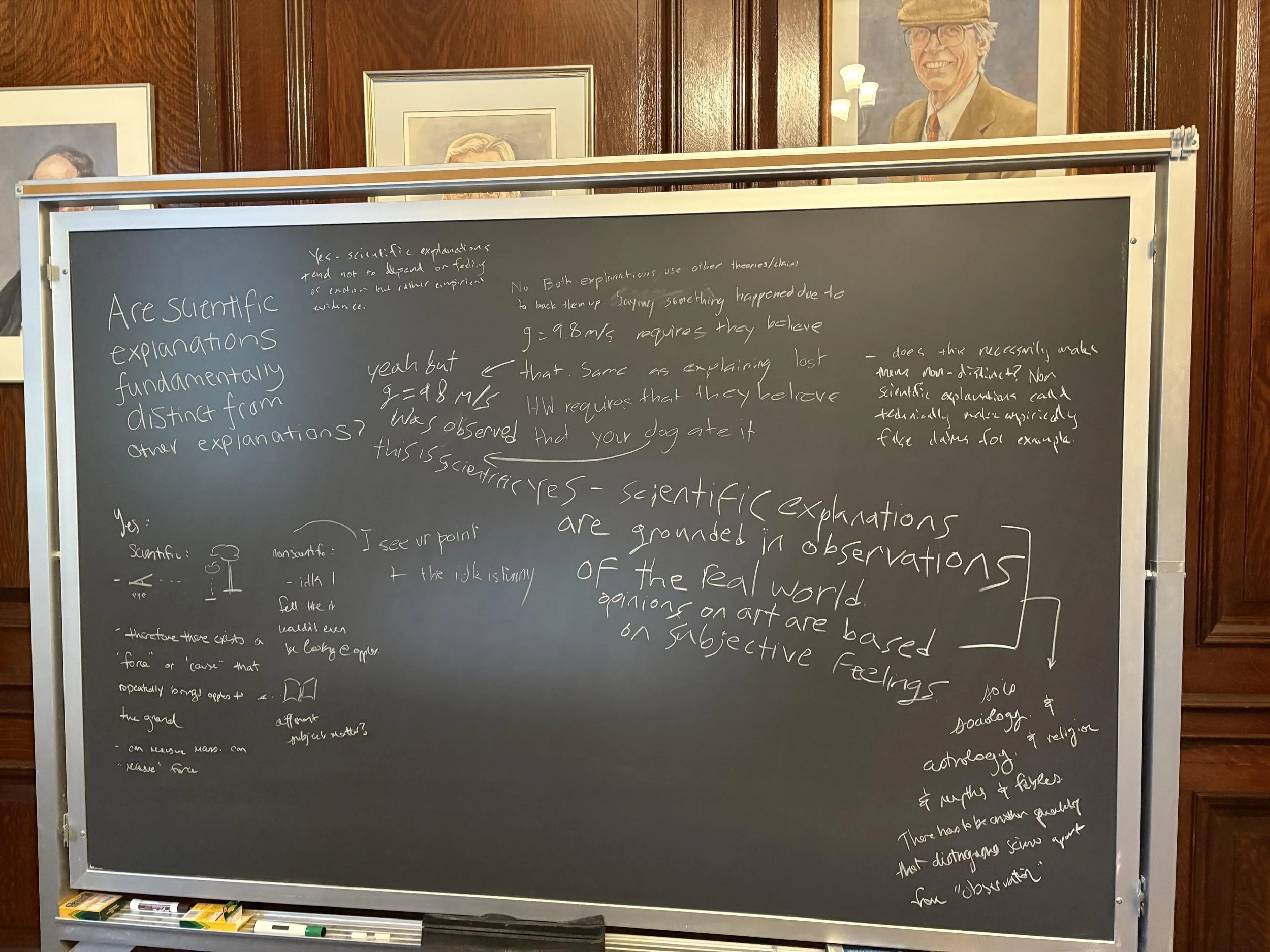
An Introduction to the Philosophy of Science, Teaching Fellow for Professor Jeffrey McDonough. Harvard University, Fall 2025.
The Philosophy of Jane Austen, Teaching Fellow for Professor Samantha Matherne. Harvard University, Spring 2025.
Magic Today: An Anthropological Perspective, Teaching Fellow for Dr. Giovanna Parmigiani. Harvard Divinity School, Spring 2025.
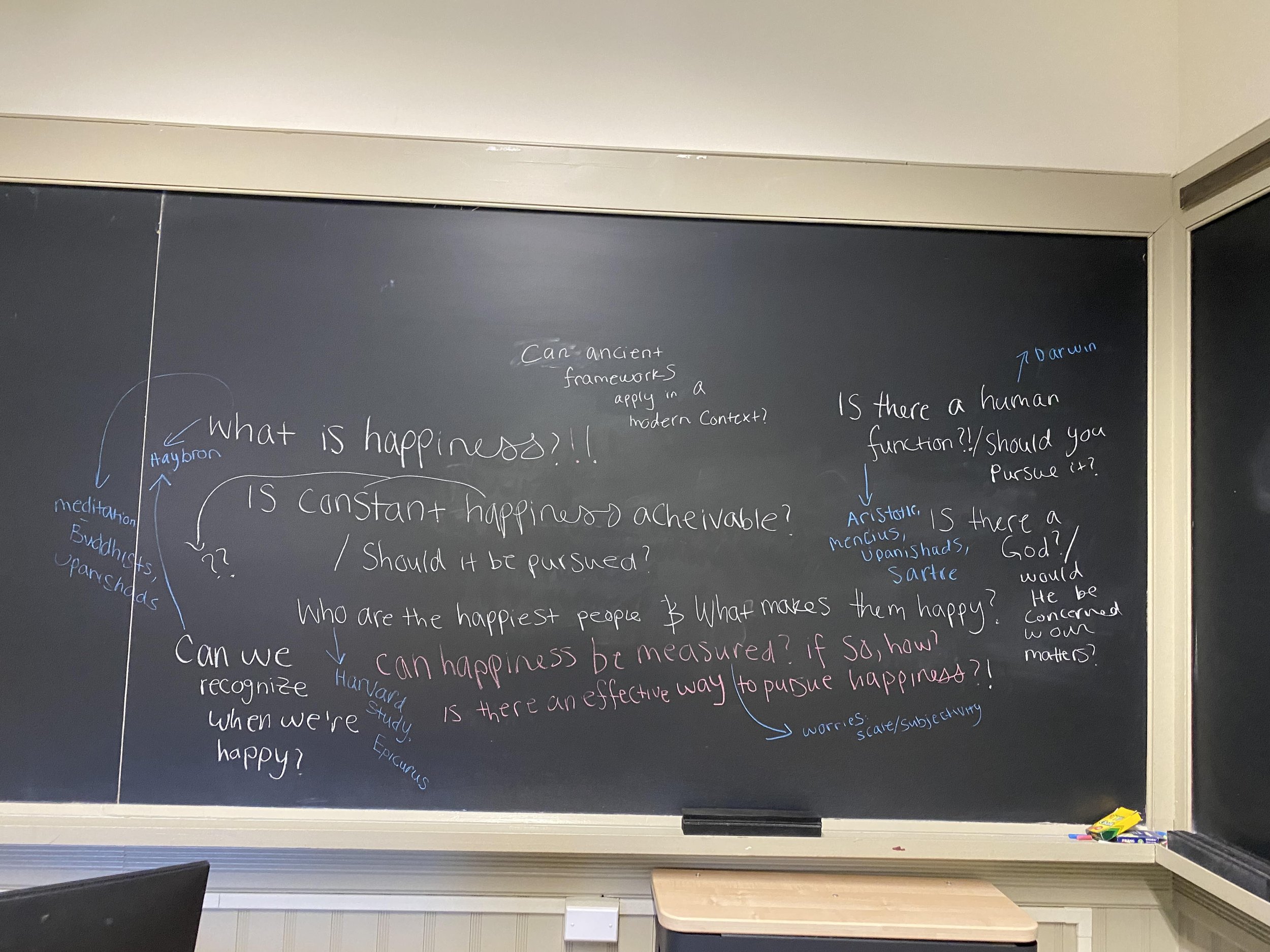
Happiness, Teaching Fellow for Professor Susanna Rinard. Harvard University, Fall 2024.
Buddhist and Western Metaphysics, Teaching Assistant for Professor Jim Kreines. Claremont Mckenna College, Spring 2022.
“Folklore and Philosophy,” lecture series for Harvard Pre-College Program for High School Students.
You can read all of my course evaluations here.